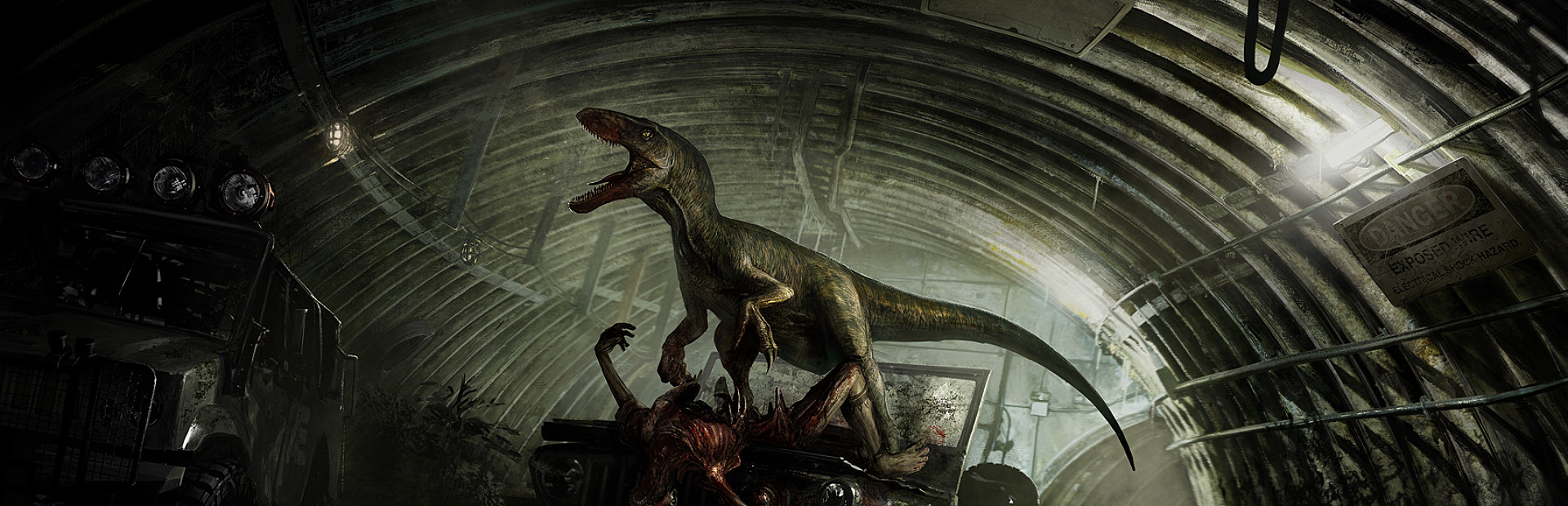
The Isle’s DevBlog #71 landed on Steam on August 1. Lead programmer Filipe used most of his section to describe a month spent refactoring — security-related code, bug fixes and several mechanics that are being rebuilt rather than tweaked. The project director then added clarifications, and the audio team closed the post with a creature-by-creature report.
What is being rebuilt
Security code comes first in the programmer’s list. No specifics are given, but the placement alone suggests low-level client work and server-side validation rather than cosmetic fixes.
The migration system is being rewritten almost entirely. The concept survives, the implementation does not: the team wants to keep the parts that worked and drop everything that didn’t, both in code and in how players interact with it. Patrol Zones ship alongside it, and the developers stress they were never meant to be just another feeding spot.
The director filled in the gaps. Migrations become individual: instead of a persistent species-wide call that drags everyone to one location, each player gets moved around the map on their own. Herbivore and omnivore diets are not dictated by migration, but standing in your migration zone directly affects how much nutrition you convert from food. Groups get tools to share the leader’s migration point so individual routes don’t tear a herd apart — details are being held back until the remaining exploits in the system are patched out.
Entomb Save and the Niagara switch
Entomb Save is a new feature rather than a refactor, though it does change how saves behave. Entomb a creature and you can park it in a dedicated slot, then play something else without throwing away that progress. Storing another animal of the same species overwrites the slot and the older one is gone — with a warning prompt first.
The director pre-empted the obvious misreading: this only triggers through a normal entombment. The current creature’s life has to end. There is no logging out mid-life to swap dinosaurs, and the game is not turning into an MMO.
Footstep VFX are moving from Cascade to Niagara, replacing the per-size, per-animal effect sets with a single master effect that scales and weights itself.
Audio progress
Camarasaurus and Avaceratops call suites are in final polish, Baryonyx subadult sounds are done, and Spinosaurus is at the sourcing and drafting stage. Camarasaurus broadcast and attract calls lean on song-like material, its danger call is a short siren-like wail built from bird recordings, and its threaten call is a booming groan with unusual harmonic overtones.
What this means for players using software
Three items in this blog matter far more than the dinosaur audio: a security refactor, an exploit sweep, and a particle system migration. Together they make the next build a rough one for anything injected into the client.
Security refactors normally arrive with new integrity and memory checks. Internal cheats are the first to trip them, so the sensible move is to sit out the first day or two after the build drops and let the community find out what still passes.
The Cascade-to-Niagara move is the underrated part. Overlays and ESP implementations that hook engine draw calls or piggyback on the particle pipeline frequently break outright when a UE title changes its VFX backend — expect blank overlays or hard crashes rather than a graceful degradation. External and DMA setups ride this out much better because they never touch the render path.
Rebuilt migrations and a new save slot also mean shifted data structures. Anything reading creature state, nutrition, coordinates or player lists will need fresh offsets, and “it launched without crashing” is not proof that it’s reading correctly.
Finally, the developers openly say they are hunting exploits in the migration system. That is exactly the period when anomalous movement gets logged and reviewed, so teleports and speed manipulation are a poor idea for the next few weeks. Check the software update statuses before a session, avoid builds flagged as unverified after the patch, and keep an HWID spoofer ready if you value the account — hardware bans tend to spike right after a security pass. Current builds for the game live on the The Isle page.
Dominate The Isle with our software
Statuses update automatically; ambiguous cases are reviewed manually. Sales may be paused during extended updates.