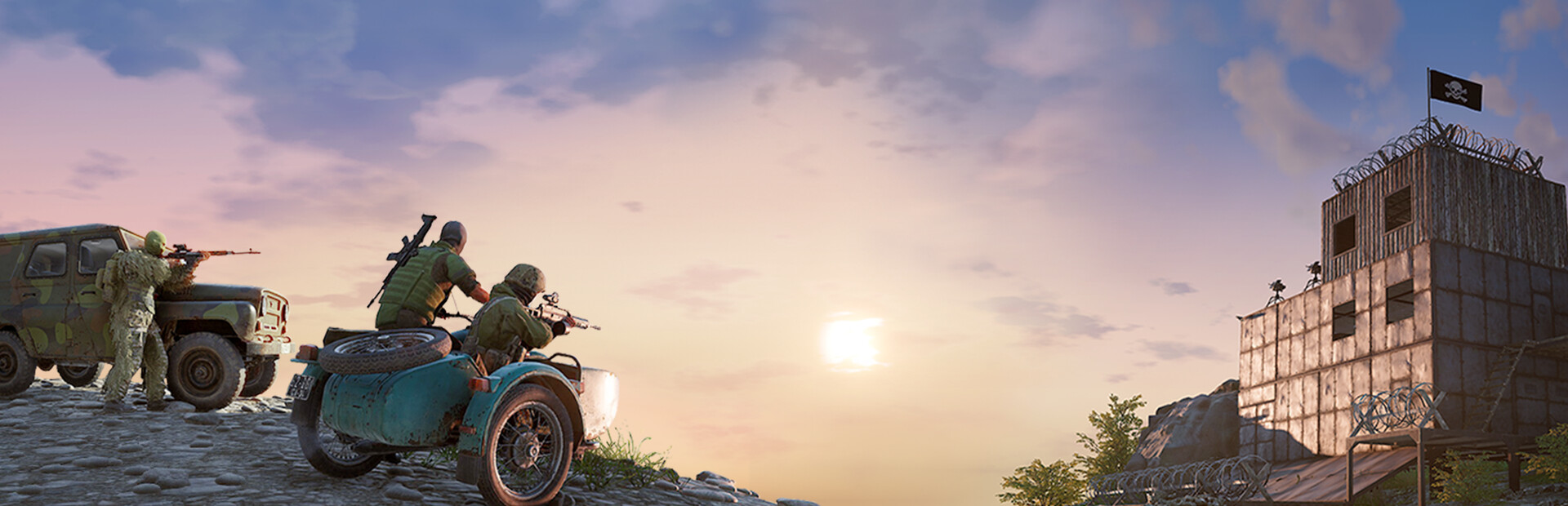
Bad Pixel has published another work-in-progress rundown for Deadside, covering what the team is building for the next update. The usual caveat applies — nothing shown is final and everything can shift based on player feedback — but the list is substantial: economy tweaks, two new ground vehicles, a tire damage system, a fresh military POI and a new animal.
Vehicles take the spotlight
Two cars are in early production. The VAZ-2107 is the civilian option; the BRDM is the armored one. Stats aren’t locked in, but the developers expect the BRDM to trade agility for a high health pool and solid protection. The models in the screenshots are still untextured, which the studio doesn’t try to hide.
More interesting than the vehicles themselves is the tire damage feature previously teased on social media. A player on foot with decent aim will be able to disable a moving car — and potentially take it. That single mechanic rewrites road behaviour in Deadside: a vehicle stops being a guaranteed escape and starts being a target you have to think about parking and driving carefully.
Balance and economy changes
Before the new content, the post runs through numbers the community has been asking about:
- Higher mission caps on both PvP and PvE servers, with PvE running slightly more concurrently.
- Increased ground vehicle spawn rates, plus new spawn points along roads.
- More frequent metal piles and basic ground loot.
- Upgrade costs cut by half.
The overall direction is a faster loop — less grinding, more activity, and considerably more contact between players who are all heading toward the same missions.
New POI, boars and cosmetics
The art team is building a military base centred on an old-style radar array made of reinforced concrete, distinct from the modern arrays already on the map. Expect verticality, long sightlines, pillboxes and interior spaces — a POI designed for fights rather than a loot stop.
Boars are joining the wildlife roster with what will likely be the highest health pool of any animal in the game, offset by the best resource drops. Beyond meat, they yield animal fat that can be rendered at a campfire and then combined at a workbench into machine oil for weapon and vehicle maintenance. On the cosmetic side, existing weapon skins are being extended to more guns including the Grom and crossbow, and a vehicle painting system with a skin pack is in development.
What this means for players using software
Nothing breaks today — this is a preview, not a build. The value is in knowing what to expect when the patch actually lands.
A few practical points:
- Expect offsets to move. Two new vehicle classes, a new animal and a new POI mean structural changes to game entities. Vehicle and animal ESP is the first thing that tends to go blank or misalign after an update like this. Running an outdated build on patch day is how you get an empty overlay at best and a client crash at worst.
- Wait out day one. Rather than testing on a live server, check the software update statuses and let the build get flagged as supported for the new client version. A day of patience costs less than a fresh account.
- Loot ESP becomes more tempting — and more visible. With higher ground loot rates and a high-value animal in the mix, the player who consistently reaches metal piles and boars first stands out on any server with attentive admins.
- Tire damage is an aim trap. Hitting a wheel on a moving car at range is exactly the kind of shot an aimbot makes look inhuman. Roads are also where witnesses are, and stealing someone’s vehicle is the fastest route to a targeted report.
- More missions means more contact. Raised mission caps push players into the same zones. Settings that went unnoticed on an empty map read very differently in a crowded compound.
If Deadside is a regular part of your rotation, it’s worth checking which builds are currently supported and keeping an HWID spoofer ready. Survival servers with hands-on administration hand out hardware bans faster than any automated detection does.
Dominate Deadside with our software
Statuses update automatically; ambiguous cases are reviewed manually. Sales may be paused during extended updates.