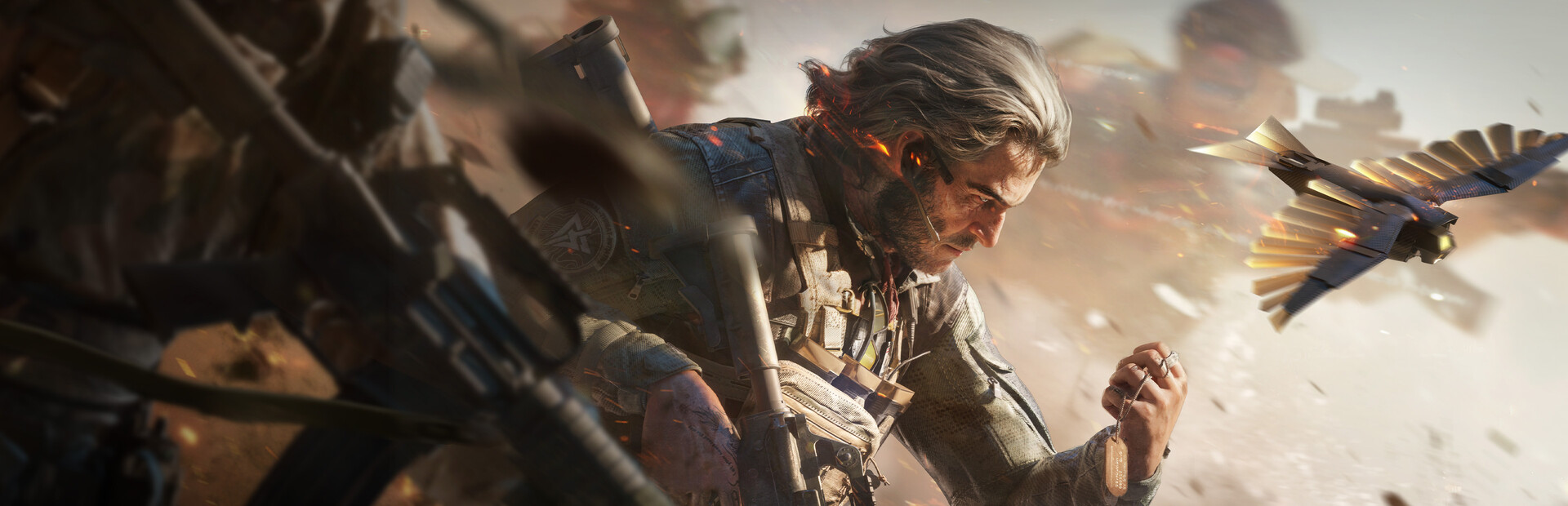
Delta Force is putting together its first official regional PC circuit of 2026. The Rise Series runs as two parallel programs, one in EMEA and one in the Americas, splits a $1,000,000 annual prize pool across two seasons, and feeds into DFI 2026. Registration for the Season 2 Open Qualifier opened on 10 August and closes on 22 August.
Dates on the board
- Registration window: 10–22 August
- Open Qualifiers: 28 August – 6 September
- Rise Series Season 2: 19 September – 18 October
The publisher notes that dates may shift depending on how many teams sign up, with final confirmation promised no later than two weeks before each registration window opens. Alongside the brackets, a Partners Program backed by multi-million-dollar investment was announced — a sign this is meant to be a standing scene around Operations rather than a one-off event.
Who can enter
The Open Qualifier is deliberately low-friction: no organisation, no invite, no prior results. Teams field three to five players, with a minimum of three on the main roster and up to two substitutes. Only one out-of-region player is allowed per squad, everyone else has to belong to the assigned region. Minimum age is 16, and players must be located inside supported server regions. Signing the official rulebook is part of registration.
Integrity requirements are the real story
Qualified teams must broadcast their matches on Twitch or YouTube with a ten-minute delay. On the Rise Series stage a webcam is also mandatory, with the face clearly visible. Account boosting and real-money trading are banned outright, and violations mean instant disqualification plus forfeiture of results. Teams unwilling to honour these terms — or their own player agreements — do not advance to the regional stage.
The delay is the usual counter to stream sniping, but combined with a webcam it also means every qualifier match becomes a recorded, reviewable artefact. Judges do not have to catch anything live; they can rewind.
What this means for players using software
Start with the obvious part: competitive matches under these rules are the worst possible place to run anything. Mandatory broadcast, a facecam and a permanent VOD hand organisers a clean evidence trail, and a tournament disqualification tends to travel further than a single account ban.
The less obvious part matters more for everyone who is not competing. Publishers almost always tighten detection when a sponsored league goes live, because visible cheating in a $1,000,000 circuit is a PR problem. Between late August and mid-October, expect more frequent anti-cheat pushes and heavier ban waves in ordinary queues, often shipped quietly next to tournament-related client patches.
A few habits that pay off during a competitive window:
- Verify build status before every session. Client updates move offsets; launching an outdated build is how people collect crashes and detections. We track current states on the software update page.
- Sit out the first hours after a patch. A day of patience costs less than an account, especially when anti-cheat changes are bundled into unrelated updates.
- Keep competitive and casual accounts apart. If you are actually entering the qualifier, keep that profile and ideally that machine completely clean — HWID links do the investigators’ job for them.
- Have a spoofer ready. When enforcement ramps up, bans start landing on hardware rather than just logins.
If you plan to play through the tournament season, check which Delta Force builds are currently marked as working, and never test a fresh update on the account you care about.
Dominate Delta Force with our software
Statuses update automatically; ambiguous cases are reviewed manually. Sales may be paused during extended updates.