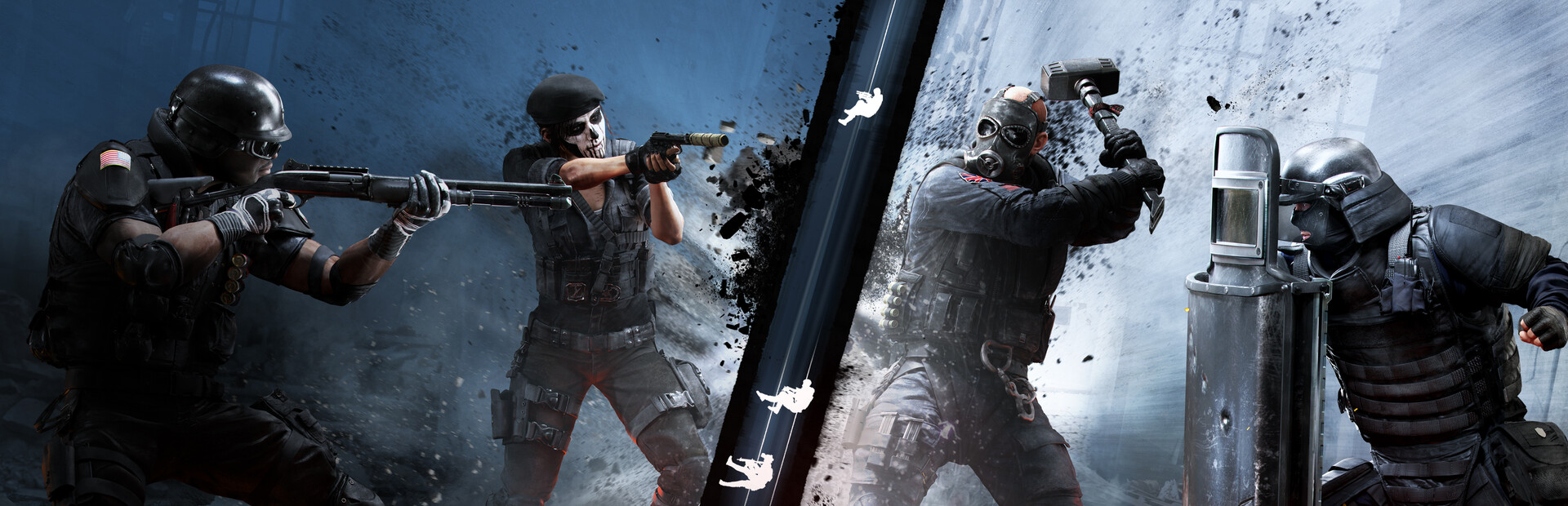
The October 15 Designer’s Notes outline a focused mid-season balance pass for Rainbow Six Siege Y11S3. Rather than rebuilding the wider weapon meta, the update concentrates on gadget response times, consistency, and utility limits. Noor receives the largest set of buffs, while Tachanka gains a new way to deploy fire without losing his existing bounce mechanic.
Tachanka gets direct control over deployment
Tachanka’s Shumikha Launcher previously depended on bouncing projectiles before they released their fire. That remains useful for denying space from behind cover, but it can introduce unwanted delay when a specific doorway or position needs to be blocked immediately.
The launcher now has an additional firing mode that triggers incendiary grenades on impact. The original bouncing behavior remains available, so this is a choice rather than a replacement. Players can use impact activation for precise, time-sensitive denial and switch back to rebounds when an indirect trajectory is safer or better suited to the angle.
This change carries more practical weight than a small numerical adjustment. Tachanka players will need to build the mode switch into their routine and make the choice before firing instead of relying on one projectile behavior in every situation.
Noor receives a broad reliability buff
The Horus Lance Launcher should now be less cumbersome to prepare and considerably more punishing against shield operators:
- drilling a ballistic shield, soft surface, or non-destructible surface takes 1.5 seconds instead of 2;
- impact guard-break strength against shield operators rises from 30% to 100%;
- Quickdraw animations reduce the equip time from 0.9 to 0.4 seconds;
- a direct hit on an operator deals 80 damage, up from 50;
- the projectile hitbox has been revised for more consistent accuracy;
- shield operators can take damage during the Horus Lance removal animation.
These changes address both sides of the interaction. Noor spends less time exposed while equipping the launcher, while a shield user is more heavily punished for offering a clean hit or taking a poor position.
Smaller utility and loadout adjustments
Solid Snake loses one Precision Mode charge for the Soliton Radar Mk III, taking the total from four to three. The radar still provides its existing utility, but target selection now matters more because there is less room for low-value use.
Valkyrie gains the Glaive-12 as a secondary weapon option. The stated purpose is to let her open camera sightlines more efficiently and from greater range without directly increasing the strength of the cameras themselves.
Capitao’s fire bolts also become slightly more responsive. The interval between each expansion of the fire area is reduced from one second to 0.9 seconds.
What this means for players using software
The notes do not announce an anti-cheat change. There is therefore no evidence here that players need a new HWID spoofer or should switch products specifically because of this balance pass. A client update can still move offsets, alter signatures, or change data structures used by third-party tools, even when the public notes only discuss operators.
Software that identifies gadgets may need more attention than generic aim settings. Tachanka’s extra launcher mode, Valkyrie’s new secondary option, and the revised Horus Lance behavior could affect object labels, gadget filters, or state tracking depending on how a tool is implemented. An overlay appearing normally is not enough to confirm that every feature is reading the updated client correctly.
Check the software update status page before the first post-patch session and wait if the relevant build is still being updated or reviewed. Once compatibility has been confirmed, use the Rainbow Six Siege software catalog to compare builds intended for the current client, then review gadget filters and keybinds before entering a match.
Dominate Rainbow Six: Siege with our software
Statuses update automatically; ambiguous cases are reviewed manually. Sales may be paused during extended updates.